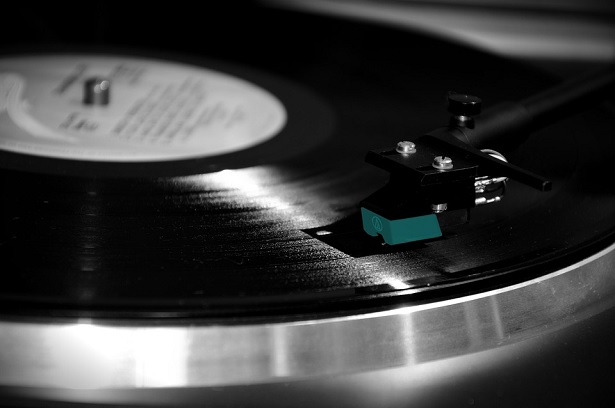
Vinyl Vs CD Vs Streaming: A history of music sources is a history of ever-evolving technology and ever-lasting love of high fidelity sound. The 2010’s has seen vinyl, CDs and streaming battle it out for attention. Since the mid-twentieth century, there has been an ebb and flow of music sources, with traditionally the CD eclipsing vinyl and streaming significantly denting the CD market.
The 2010’s has seen vinyl, CDs and streaming battle it out for attention. Since the mid-twentieth century, there has been an ebb and flow of music sources, with the CD eclipsing vinyl and streaming significantly denting the CD market.
In the past few years, however, vinyl has seen a well-documented resurgence while CDs have not died out as predicted, although they have taken a hit. Progressions in technology have not been reflected in audiophile’s tastes and preferences- there is a reason why vinyl is still going strong.
Each music source possesses strengths and weaknesses that match or fall short of each individual listener’s tastes. In this blog we will explore the history and compare the advantages and disadvantages of vinyl, CD and streaming, helping you to make an informed decision.
Vinyl
First thing is first, sound is by its very nature analogue. As a result, analogue music sources deliver a sound that is as close to the original recording as possible, warts and all. Added to this, vinyl is a lossless format so nothing is lost when the record is pressed, again retaining the sound as it was recorded, in the respect to compression.
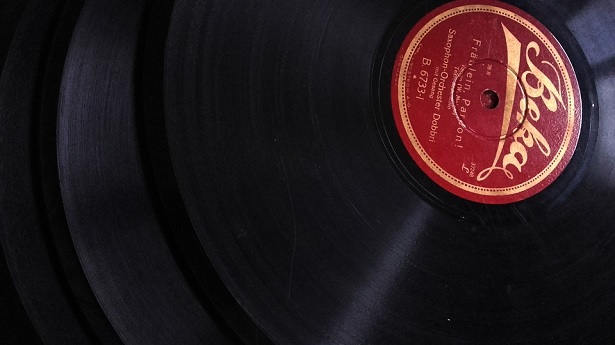
Before the birth of the vinyl LP, records were made from abrasive material and their recording time was limited to five minutes per side. The vinyl LP revolutionised this as it could fit up to twenty minutes of music on both sides. Perfect for extended recording, artists could now record albums of work. The rest is history.
Advantages
The first advantage has to be sound quality. Yes, you may hear faint crackles and smoky tones, but that is part of the vinyl listening experience.
As mentioned above, vinyl is an analogue medium so is well suited to reproducing analogue sound. Sound quality is particularly rich for recordings made in the 50s, 60s and 70s as they were recorded analogically. The sound of vinyl has a depth and authenticity that more modern mediums find difficult to match.

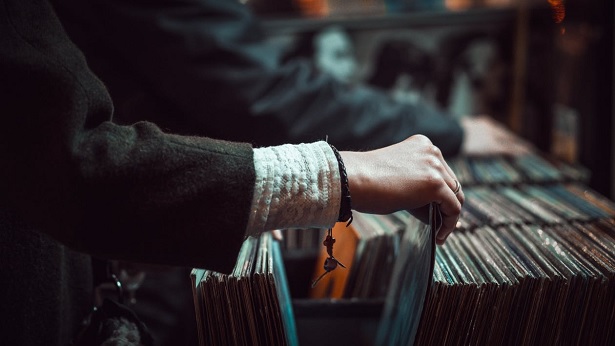
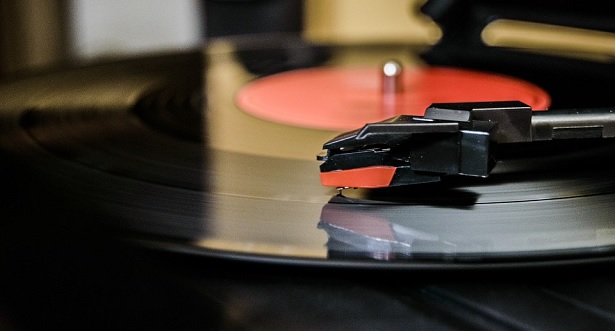
One such superior area is the tangibility of vinyl. Many people love the physicality of vinyl, from physically placing it on the turntable, caring for it and poring over album artwork and sleeve notes. You cannot replicate this experience with streaming. Indeed, with streaming services listeners do not ‘own’ the music, so in a few decades time they will not have a physical collection of archived music.
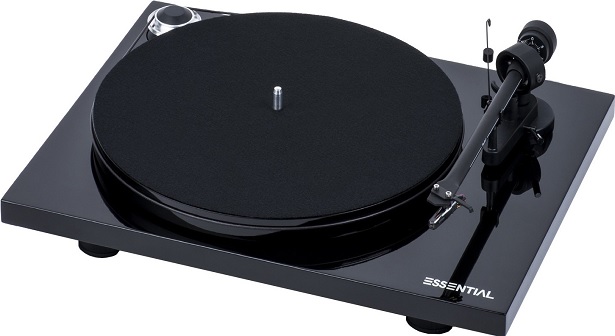 The Pro-Ject Essential III Turntable, one of our most popular turntables, a brilliant way to experience vinyl. Click on the image for more product information.
Disadvantages
The downside to the physicality of vinyl is that they take up room you may not have, especially if you have a large collection. With CDs taking up less space and streaming none at all, it is clear that vinyl is the most space-demanding of the trio.
Vinyl is notoriously high-maintenance. If you are willing to put in the effort and time to look after your vinyl properly this should not be a problem, but realistically wear and tear does happen with consequences to your sound performance.
Vinyl is vulnerable to dust, scratches, warping and scuffs which causes problems such as fluctuations in pitch, ticks and pops or can even make the record unplayable. If you find yourself with a scratched or cracked record then you will fully understand the meaning of the phrase ‘like a broken record’.
With careful handling, time and effort your vinyl should last for a remarkably long time. Vinyl from fifty years ago still sounds magnificent now thanks to careful owners. The team at Audio Affair can advise you on the best way to look after your vinyl.
CD
The 1980’s saw the rise of the CD aka compact disc, an event dubbed as the ‘Big Bang’ of the digital audio revolution. Co-developed by Sony and Phillips, the CD was launched in 1983 with the aim of offering clear and noiseless digital sound.
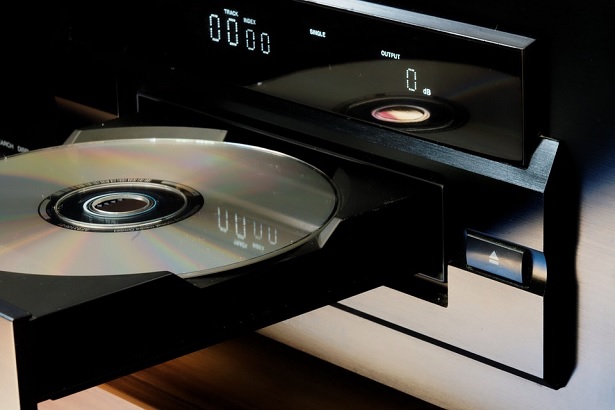
 Prefer the clean sound of CDs? Check out the Creek Evolution 100CD CD Player, available now at Audio Affair.
Advantages
The CD was praised for its clear and clean sound reproduction. The CD eliminated the impurities (some may say character) of vinyl and currently still enjoys superior sound quality to some internet streaming services.
Compared to streaming, CDs are more reliable as you just pop your disc in your player and off you go, whereas streaming relies on an internet connection and software which can’t always be trusted to work effectively.
Disadvantages
Sound quality is a double-edged sword for CDs, with some people put off by its clear sound.
It is argued that CDs lose that authentic character enjoyed by vinyl and instead offer a clinical, cold and thin quality. This is especially the case of older works that were recorded in analogue and have since been digitized. Moreover, because of the act of compression, frequencies are cut and as a result the sound lacks depth.
Streaming
As with most areas of life in the 21st century, the internet is now a music source via streaming services. If you want more information about setting up a streaming system, check out our blog here.
Advantages
The major advantage of streaming is immediately obvious: it is effortlessly convenient and gives you access to practically every song ever made, instantly at your fingertips.
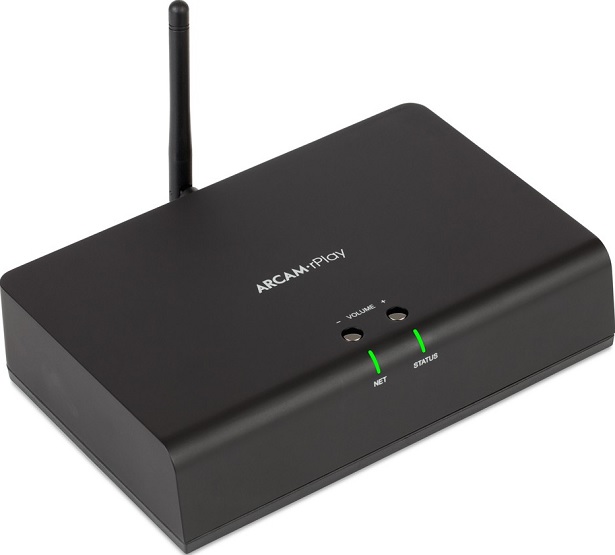 The Arcam rPlay Hi-FI Network Player is an effective and simple way to start your streaming set-up. Click on the image for more information.
The price is also a major advantage considering that the monthly cost of a subscription to a service such as Spotify Premium is a similar cost to one CD. For the price of one CD you can discover a huge range of artists, research new music and curate your library according to your own taste.

Compared to both vinyl and CDs, streaming is the essential space-saving solution. It is amazing really when you sit back and think of the vast array of music at your fingertips, all because of your internet connection.
Disadvantages
This is not to say that streaming is faultless.
Concerns over sound quality have dogged the reputation of streaming. For example, Spotify has a bit rate of 160 kpbs which is less than the standard of mp3 files, while Spotify Premium comes in at 360 kpbs which makes it just equal to mp3.
Both offer less quality than a CD, indeed, only Tidal offers a lossless compression audio, making it the only streaming service to offer CD quality. Streaming has a long way to go if it helps to excel CDs for sound quality.
Rather than pitting each music source against each other, it is clear that listeners are swayed by an emotional preference, as no source is 100% perfect.
Rather than sticking steadfastly to one, it seems that audiophiles enjoy a mixture of all three, as seen through the rise in multi-channel listening where streaming is used for research and vinyl for collecting.
Whether you are a vinyl junkie, CD aficionado or a streaming super-fan, the team at Audio Affair are more than happy to assist and advise your journey to the ideal hi-fi system based on your desired music source.


I have always much preferred the true analogue purity of vinyl and
open reel recordings, especially those which are made in real time or,
better still, half-speed or even reverse-half-speed mastered, be it
vinyl or ¼” tape at 15 or 30 ips as offered by The Tape Project.
As a student in the early 80s I made money working part-time in a
specialist hi-fi store and most of my wages, and a good part of my
student grant, went on hi-fi equipment and vinyl. My first decent
turntable was the legendary Pioneer PL-12D with the ubiquitous Shure
M75ED. Even this modest setup was incredibly tuneful and revealing and
most able at making the third guitar on Dire Straits “Sultans Of Swing”
readily audible and tightly placed within the stereo field.
With the dawn of CD in the mid 80s it was essential to have an
amplifier with a pre-amplifier input which could cope with the extended
dynamic range. Indeed by then most quality amps had an auxiliary socket
and with the advent of Dolby B, C and HX-Pro headroom extension, and the
greater popularity of DBX and ADRES noise reduction systems many amps
could already cope admirably with the demands of CD. Though CD could not
cope with the demands of the discerning listener. Many analogue
recordings were transferred directly to the new digital format, without
any remastering, and this oft times resulted in abysmal sound sources
which revealed the transgressions of the original recording engineer and
the ill-thought edits of the producer.
It took the music industry some while to get used to the recording
protocols necessary to permit CD to shine as a format on its own. Even
so, throughout all this time i much preferred the sound from well
recorded and pressed standard vinyl (as opposed to premium mastered and
cut heavyweight virgin vinyl) to the brash, compressed and approximated
sound of CD. By virtue of digital recording (other in very high sampling
rate PCM) the digital waveform can, by its very nature, only ever be an
approximation of the analogue wave form which our ears are accustomed
to.
Then came Minidisk, which through its PCM-based system could offer
better sound quality than CD, but never really took off (other than in
my house).
More recently we’ve been exposed to a plethora of download and
streaming formats – initially these were in highly compressed mp3 format
which sacrificed sound for storage capacity – so it was now possible to
store a couple of hundred songs on a CD. The ever moving goalposts of
ever-larger storage capacity and reducing cost if HDD and SDD means that
ultra compression of recorded data is not as important and so loss-less
formats became the choice of those who favoured quality over quantity.
This has proliferated even further with ever greater internet speeds
available over broadband without the need for costly ISDN lines and the
concomitant dawn of cloud storage. It’s now possible to stream music to
each room in the house at higher quality than CD. But is still doesn’t
sound as good as a premium hard-wired analogue system.
Also muddying the waters here is DAB radio. Even in its latest form
it does not come close to matching the supreme sound of a good FM stereo
broadcast. it has further struggled to breach the consumer market into
the automobile and the high drain of DAB means that portable DAB radios
eat batteries at tremendous rate. Moreover, DAB is now the big white
elephant as it has been superseded with the possibility of better sound
quality and more universal reception coverage afforded through internet
radio. More and more modern cars are also being fitted with wi-fi
capabilities so DAB has sung its swan-song.
A couple of weeks ago I was invited by Henley Audio to the launch in
the UK of some new Ortofon moving magnet and moving coil pickup
cartridges at the renowned British hi-fi emporium, Doug Brady Hi-Fi in
Warrington. Here our ears were treated to some top-notch analogue hi-fi
equipment as we heard a selection of cartridges ranging in price from a
modest £95 up to £5,500. Even the cheapest of these cartridges gave a
more faithful sound on a premium turntable with quality tonearm, than
can be discerned from a similarly priced CD player. As we moved up to
the more esoteric cartridges the clarity totally eclipsed even the most
esoteric of CD players and streaming devices and one could hear Hannah
Reid’s breath on the haunting vinyl recording of London Grammar’s “If
You Wait?” – grown men (yes me too) were brought to the point of tears,
such was the emotion conveyed on the vinyl system. Digital just can’t do
that to the same degree. There was not merely a stereo field, but a
three dimensional aspect too.
Here’s the greatest advantage of the vinyl format: you buy your 12″,
10″ or 7″ vinyl and enjoy the supreme sound as you savour the
magnificent artwork on the album over and read the sleeve notes and
inserts (such as the poster and stickers with Pink Floyd’s “Dark Side Of
The Moon”) and it doesn’t stop there. You see you can dub your album to
a high quality analogue cassette or analogue open reel tape…or to DAT
or even a CD and you can even copy it to your had drive or media player
and take it everywhere. Vinyl sounds better, is more versatile and so
you get more bang per buck.
Vinyl never went away, it just got better and matured with age.
indeed those of us who retained our vinyl have found that it and our
quality turntables, just like a good collection of wine, have generally
increased in value at a tremendous rate. And it’s still there – you can
still hold and even smell it as well as play it. Try doing that in 40
years time with streamed material which you paid for, but never truly
owned in the first place.
As a student in the early 80s I made money working part-time in a specialist hi-fi store and most of my wages, and a good part of my student grant, went on hi-fi equipment and vinyl. My first decent turntable was the legendary Pioneer PL-12D with the ubiquitous Shure M75ED. Even this modest setup was incredibly tuneful and revealing and most able at making the third guitar on Dire Straits “Sultans Of Swing” readily audible and tightly placed within the stereo field.
With the dawn of CD in the mid 80s it was essential to have an amplifier with a pre-amplifier input which could cope with the extended dynamic range. Indeed by then most quality amps had an auxiliary socket and with the advent of Dolby B, C and HX-Pro headroom extension, and the greater popularity of DBX and ADRES noise reduction systems many amps could already cope admirably with the demands of CD. Though CD could not cope with the demands of the discerning listener. Many analogue recordings were transferred directly to the new digital format, without any remastering, and this oft times resulted in abysmal sound sources which revealed the transgressions of the original recording engineer and the ill-thought edits of the producer.
It took the music industry some while to get used to the recording protocols necessary to permit CD to shine as a format on its own. Even so, throughout all this time i much preferred the sound from well recorded and pressed standard vinyl (as opposed to premium mastered and cut heavyweight virgin vinyl) to the brash, compressed and approximated sound of CD. By virtue of digital recording (other in very high sampling rate PCM) the digital waveform can, by its very nature, only ever be an approximation of the analogue wave form which our ears are accustomed to.
Then came Minidisk, which through its PCM-based system could offer better sound quality than CD, but never really took off (other than in my house).
More recently we’ve been exposed to a plethora of download and streaming formats – initially these were in highly compressed mp3 format which sacrificed sound for storage capacity – so it was now possible to store a couple of hundred songs on a CD. The ever moving goalposts of ever-larger storage capacity and reducing cost if HDD and SDD means that ultra compression of recorded data is not as important and so loss-less formats became the choice of those who favoured quality over quantity. This has proliferated even further with ever greater internet speeds available over broadband without the need for costly ISDN lines and the concomitant dawn of cloud storage. It’s now possible to stream music to each room in the house at higher quality than CD. But is still doesn’t sound as good as a premium hard-wired analogue system.
Also muddying the waters here is DAB radio. Even in its latest form it does not come close to matching the supreme sound of a good FM stereo broadcast. it has further struggled to breach the consumer market into the automobile and the high drain of DAB means that portable DAB radios eat batteries at tremendous rate. Moreover, DAB is now the big white elephant as it has been superseded with the possibility of better sound quality and more universal reception coverage afforded through internet radio. More and more modern cars are also being fitted with wi-fi capabilities so DAB has sung its swan-song.
A couple of weeks ago I was invited by Henley Audio to the launch in the UK of some new Ortofon moving magnet and moving coil pickup cartridges at the renowned British hi-fi emporium, Doug Brady Hi-Fi in Warrington. Here our ears were treated to some top-notch analogue hi-fi equipment as we heard a selection of cartridges ranging in price from a modest £95 up to £5,500. Even the cheapest of these cartridges gave a more faithful sound on a premium turntable with quality tonearm, than can be discerned from a similarly priced CD player. As we moved up to the more esoteric cartridges the clarity totally eclipsed even the most esoteric of CD players and streaming devices and one could hear Hannah Reid’s breath on the haunting vinyl recording of London Grammar’s “If You Wait?” – grown men (yes me too) were brought to the point of tears, such was the emotion conveyed on the vinyl system. Digital just can’t do that to the same degree. There was not merely a stereo field, but a three dimensional aspect too.
Here’s the greatest advantage of the vinyl format: you buy your 12″, 10″ or 7″ vinyl and enjoy the supreme sound as you savour the magnificent artwork on the album over and read the sleeve notes and inserts (such as the poster and stickers with Pink Floyd’s “Dark Side Of The Moon”) and it doesn’t stop there. You see you can dub your album to a high quality analogue cassette or analogue open reel tape…or to DAT or even a CD and you can even copy it to your had drive or media player and take it everywhere. Vinyl sounds better, is more versatile and so you get more bang per buck.
Vinyl never went away, it just got better and matured with age. indeed those of us who retained our vinyl have found that it and our quality turntables, just like a good collection of wine, have generally increased in value at a tremendous rate. And it’s still there – you can still hold and even smell it as well as play it. Try doing that in 40 years time with streamed material which you paid for, but never truly owned in the first place.
As a student in the early 80s I made money working part-time in a specialist hi-fi store and most of my wages, and a good part of my student grant, went on hi-fi equipment and vinyl. My first decent turntable was the legendary Pioneer PL-12D with the ubiquitous Shure M75ED. Even this modest setup was incredibly tuneful and revealing and most able at making the third guitar on Dire Straits “Sultans Of Swing” readily audible and tightly placed within the stereo field.
With the dawn of CD in the mid 80s it was essential to have an amplifier with a pre-amplifier input which could cope with the extended dynamic range. Indeed by then most quality amps had an auxiliary socket and with the advent of Dolby B, C and HX-Pro headroom extension, and the greater popularity of DBX and ADRES noise reduction systems many amps could already cope admirably with the demands of CD. Though CD could not cope with the demands of the discerning listener. Many analogue recordings were transferred directly to the new digital format, without any remastering, and this oft times resulted in abysmal sound sources which revealed the transgressions of the original recording engineer and the ill-thought edits of the producer.
It took the music industry some while to get used to the recording protocols necessary to permit CD to shine as a format on its own. Even so, throughout all this time i much preferred the sound from well recorded and pressed standard vinyl (as opposed to premium mastered and cut heavyweight virgin vinyl) to the brash, compressed and approximated sound of CD. By virtue of digital recording (other in very high sampling rate PCM) the digital waveform can, by its very nature, only ever be an approximation of the analogue wave form which our ears are accustomed to.
Then came Minidisk, which through its PCM-based system could offer better sound quality than CD, but never really took off (other than in my house).
More recently we’ve been exposed to a plethora of download and streaming formats – initially these were in highly compressed mp3 format which sacrificed sound for storage capacity – so it was now possible to store a couple of hundred songs on a CD. The ever moving goalposts of ever-larger storage capacity and reducing cost if HDD and SDD means that ultra compression of recorded data is not as important and so loss-less formats became the choice of those who favoured quality over quantity. This has proliferated even further with ever greater internet speeds available over broadband without the need for costly ISDN lines and the concomitant dawn of cloud storage. It’s now possible to stream music to each room in the house at higher quality than CD. But is still doesn’t sound as good as a premium hard-wired analogue system.
Also muddying the waters here is DAB radio. Even in its latest form it does not come close to matching the supreme sound of a good FM stereo broadcast. it has further struggled to breach the consumer market into the automobile and the high drain of DAB means that portable DAB radios eat batteries at tremendous rate. Moreover, DAB is now the big white elephant as it has been superseded with the possibility of better sound quality and more universal reception coverage afforded through internet radio. More and more modern cars are also being fitted with wi-fi capabilities so DAB has sung its swan-song.
A couple of weeks ago I was invited by Henley Audio to the launch in the UK of some new Ortofon moving magnet and moving coil pickup cartridges at the renowned British hi-fi emporium, Doug Brady Hi-Fi in Warrington. Here our ears were treated to some top-notch analogue hi-fi equipment as we heard a selection of cartridges ranging in price from a modest £95 up to £5,500. Even the cheapest of these cartridges gave a more faithful sound on a premium turntable with quality tonearm, than can be discerned from a similarly priced CD player. As we moved up to the more esoteric cartridges the clarity totally eclipsed even the most esoteric of CD players and streaming devices and one could hear Hannah Reid’s breath on the haunting vinyl recording of London Grammar’s “If You Wait?” – grown men (yes me too) were brought to the point of tears, such was the emotion conveyed on the vinyl system. Digital just can’t do that to the same degree. There was not merely a stereo field, but a three dimensional aspect too.
Here’s the greatest advantage of the vinyl format: you buy your 12″, 10″ or 7″ vinyl and enjoy the supreme sound as you savour the magnificent artwork on the album over and read the sleeve notes and inserts (such as the poster and stickers with Pink Floyd’s “Dark Side Of The Moon”) and it doesn’t stop there. You see you can dub your album to a high quality analogue cassette or analogue open reel tape…or to DAT or even a CD and you can even copy it to your had drive or media player and take it everywhere. Vinyl sounds better, is more versatile and so you get more bang per buck.
Vinyl never went away, it just got better and matured with age. indeed those of us who retained our vinyl have found that it and our quality turntables, just like a good collection of wine, have generally increased in value at a tremendous rate. And it’s still there – you can still hold and even smell it as well as play it. Try doing that in 40 years time with streamed material which you paid for, but never truly owned in the first place.